
 Español
 Pусский
 العربية
 Türk dili


Extrusion Die Abrasive Flow Machining
Extrusion Die Abrasive Flow Machining is a highly specialized finishing process used to improve the surface quality, edge condition, and internal geometry of extrusion dies. It is especially valuable for dies with complex channels, narrow passages, and difficult-to-reach areas that are hard to finish using conventional machining methods. In this process, a viscous, abrasive-laden medium is forced through the die’s internal flow paths under controlled pressure. As the medium moves through the restricted geometry, the abrasive particles gradually remove small amounts of material from the internal surfaces, producing a smoother finish and more uniform flow characteristics.The main purpose of abrasive flow machining for extrusion dies is to eliminate tool marks, burrs, micro-asperities, and surface irregularities left from drilling, milling, EDM, or other manufacturing processes. These imperfections can disrupt material flow during extrusion, leading to defects such as uneven thickness, surface scratches, dead zones, pressure imbalance, and inconsistent product quality. By polishing the internal surfaces of the die, abrasive flow machining helps create a more stable and predictable flow pattern, which is essential for high-precision extrusion applications.One of the most important advantages of this method is its ability to process geometries that are otherwise inaccessible. Extrusion dies often contain long, narrow, contoured, or intersecting channels. Traditional hand polishing may be difficult, inconsistent, or impossible in these regions. Abrasive flow machining reaches these hidden surfaces uniformly, making it particularly useful for dies used in aluminum, magnesium, copper, and other metal extrusion processes. It can also be applied to dies with complex profiles designed for automotive, aerospace, electronics, and industrial components.The process parameters can be adjusted to control the finishing result. Factors such as abrasive grain size, media viscosity, pressure, temperature, cycle time, and number of passes all influence the material removal rate and final surface roughness. Coarser media may be used for initial deburring or rapid stock removal, while finer media is selected for final polishing. This flexibility allows engineers to tailor the process to the specific needs of each die, balancing surface improvement with dimensional accuracy.Abrasive flow machining also offers benefits in terms of die life and productivity. A smoother internal surface reduces friction and localized wear during operation, which can extend tool life and lower maintenance requirements. Improved flow behavior can reduce extrusion pressure and energy consumption, while increasing product consistency and reducing scrap rates. Although the process does remove material, the amount is typically very small and carefully controlled to preserve critical dimensions.In summary, extrusion die abrasive flow machining is an effective finishing technique for improving internal surface quality, reducing burrs, and optimizing material flow in complex die geometries. Its ability to reach intricate passages and deliver controlled, uniform polishing makes it an important process for precision extrusion manufacturing.
Products
Category:
-
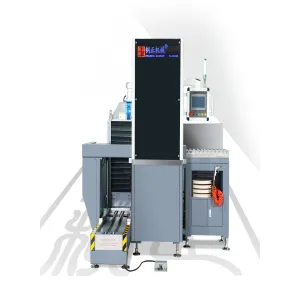
Abrasive Flow Machining
Category: Abrasive flow machiningBrowse number: 309Number:Release time: 2026-06-03 09:25:37The Abrasive Flow Machining delivers high-precision, uniform polishing for extrusion dies, improving surface finish and minimizing wear. It features automatic operation, flexible abrasive technology, and compatibility with various die sizes.
News
Category:
No search results found!
Case
Category:
No search results found!
Video
Category:
No search results found!
Download
Category:
No search results found!
Job
Category:
No search results found!
Featured Products
-
NEWS
Abrasive Flow Machining
Learn more



 WhatsApp
 Phone
Phone E-mail